Modular Kitchen Design Course: Learn Professional Kitchen Design and Build a Career
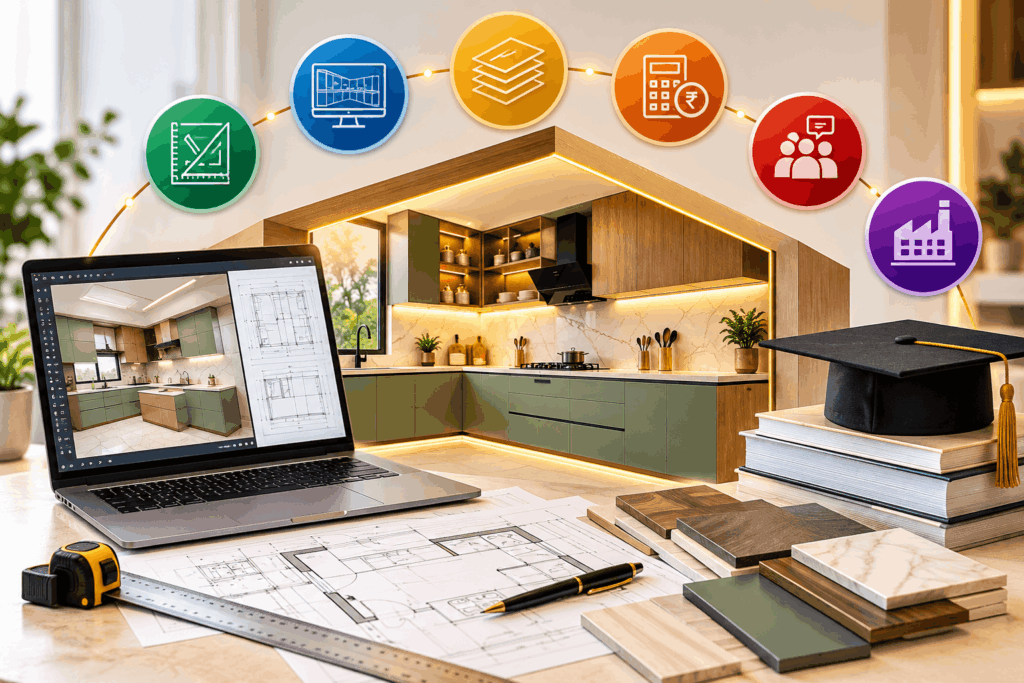
The demand for modern, functional and stylish kitchens is growing rapidly as homeowners increasingly prefer customized interiors. This has created exciting opportunities for interior designers, furniture professionals, carpenters and aspiring entrepreneurs. A Modular Kitchen Design Course can help you develop the practical skills required to design, plan and execute professional modular kitchens.
Whether you want to start your own modular kitchen business, add kitchen design to your existing interior design services, or develop professional design skills, structured training can give you a strong foundation.
What Is a Modular Kitchen Design Course?
A Modular Kitchen Design Course is a practical learning program that teaches students how to plan, design, calculate and execute modular kitchens. Instead of focusing only on theoretical concepts, a good course covers the complete process involved in a real kitchen project.
Students can learn about kitchen layouts, measurements, materials, hardware, storage solutions, 2D and 3D designing, cut lists, costing and client handling. Understanding these areas together makes it easier to convert a customer’s requirements into a practical and commercially viable kitchen design.
What Will You Learn?
A comprehensive course should cover the complete workflow of modular kitchen design.
1. Kitchen Measurement and Planning
Accurate measurements are the foundation of a successful kitchen. Training typically covers wall measurements, openings, ceiling height, plumbing points, electrical points and appliance positions. Students also learn how to plan the kitchen according to the available space.
2. Modular Kitchen Layouts
You can learn how to work with common layouts such as L-shaped, U-shaped, straight and parallel kitchens. The course can also explain how to plan work zones, cabinets, drawers, appliances and storage according to the customer’s requirements.
3. 2D and 3D Kitchen Designing
Modern kitchen projects often require attractive visual presentations. A Modular Kitchen Design Course can introduce students to 2D planning and 3D visualization so they can present their ideas clearly to clients before manufacturing begins.
4. Materials and Hardware
Choosing the right material is important for durability and pricing. Students can learn about plywood, HDHMR, MDF, laminates, acrylic, back panels, edge banding and other commonly used materials.
The course can also cover kitchen hardware such as hinges, drawer systems, baskets, channels, lifts and other accessories.
5. Cut Lists and Costing
Designing a kitchen is only one part of the business. Correct calculations are equally important. Modular Kitchen Training can teach students how to prepare cut lists, calculate material requirements and estimate project costs.
Understanding costing helps reduce material wastage and makes it easier to prepare accurate quotations for customers.
Learn Client Handling and Sales
Technical knowledge alone is not enough to run a successful kitchen business. A professional course should also introduce students to client communication, requirement gathering, quotation preparation and presenting designs.
Learning how to understand a customer’s budget, lifestyle and storage requirements can help create more practical proposals and improve the overall customer experience.
Start Your Modular Kitchen Business
One of the biggest advantages of learning modular kitchen design is that the skills can be applied to a business. Students interested in entrepreneurship can learn about the basic requirements for starting a modular kitchen operation, including workflow planning, supplier coordination, manufacturing and installation.
For interior designers and furniture businesses, adding modular kitchen services can also create an additional revenue opportunity.
Who Can Join a Modular Kitchen Design Course?
The course can be useful for:
- Interior designers
- Architects and design professionals
- Carpenters and furniture professionals
- Modular kitchen business owners
- Furniture manufacturers
- Students and beginners
- Entrepreneurs planning to enter the modular kitchen industry
You do not necessarily need extensive previous experience. A practical training program can help beginners understand the complete process step by step.
Why Choose Modular Kitchen Training?
The modular kitchen industry combines design, manufacturing, materials, hardware, costing and customer management. Learning these subjects together can provide a more complete understanding than learning design software alone.
Practical Modular Kitchen Training allows learners to understand how a kitchen moves from the initial measurement and design stage to costing, production and final installation.
Build Your Skills with a Modular Kitchen Design Course
A Modular Kitchen Design Course can be a valuable learning opportunity for anyone interested in kitchen design, interior work or the modular furniture industry. By learning design, materials, measurements, costing, client handling and business processes, students can develop skills that can be applied to real-world projects.
If your goal is to become a professional kitchen designer or start your own modular kitchen business, choosing a course that combines design knowledge with practical Modular Kitchen Training can help you take the first step toward that goal.